Showing posts with label engage. Show all posts

Monday, 24 March 2025

Engage, Empower, Inspire... Setting Group Norms

Setting group norms at the beginning of the year is one of the most crucial parts of a successful guided reading lesson, in my opinion. Students struggle to work effectively in a group if they don't know how to interact with their group or why they actually need to do this. 
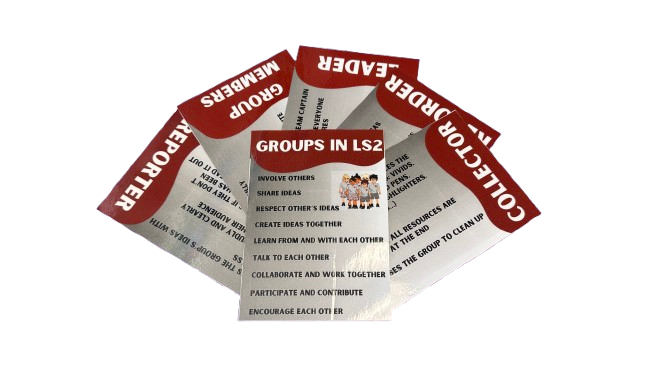
This year I made a huge change and rather than doing this group by group I chose to take on the challenge of doing this as whole class lessons with all my learners sitting in their reading groups. The first lesson was an extremely structured step by step lesson with lots of teacher guidance. What I noticed is having the opportunity to look at how other groups were interacting helped strengthen the confidence of all the groups, regardless of ability.

I selected a text that linked explicitly to our inquiry topic which meant everyone was able to make an immediate connection to it. We began with a multimodal dive into the front loading texts. The first one, a short 3 minute video, was unpacked with me having the locus of control. This meant I was able to model and guide every step of the process. What I noticed was I had an immediate buy-in. It was evident that I knew the content and was able to respond to questions asked without referring to the texts. 

We kept it simple and during the first viewing simply just watched it. I then asked each group leader to ask everyone in the group to share something they found interesting. When we watched it a second time every student had a vivid and access to the group note taking paper. The challenge this time was to write down any words that were interesting, new or unknown. I made it clear this wasn't a spelling or handwriting lesson so encouraged the words to be recorded the way they sounded if the correct spelling was unknown. Following this challenge the leaders were once again asked to ask everyone in the group to share a word and say why that word had been recorded. The final independent challenge for this text was to watch the video again, this time in groups not on the TV, and record any facts that were deemed important or interesting. Once this had been completed (short time limits were given) the leaders were asked to get the talk going with the final group challenge being to share what has been written then co-construct 5 questions they may have about the text. What was happening here was a gradual shift in the locus of control.

With all our vocabulary, facts and questions recorded we moved onto the balcony for a very loud speed dating style activity. The noise level and laughter that came as a direct result of the speed of the partner changes everyone enjoyed the opportunity to move and to share their new learning. 


Having stretched our legs and made the most of the opportunity to learn with and from each other we used the same process to unpack the next set of short texts. This time I gave both written and spoken instructions and let the groups take control and work at their own paces. We Have a set of group norm cards which were displayed and unpacked as we went along so everyone knew their role. As always in LS2 their are no passengers in group challenges. In my favour was the fact that two weeks before we had been on camp where both individual and group challenges were the order of the day.

Day 2 saw a small blip in the flow as we changed leaders. I let each group select their leader each time. The message given was that at this time of the year we are all learning how to lead and how to be a member of a group so supporting each other was the order of the day. Groups were encouraged to use the group norm cards in their group boxes to help guide them. During this time I moved around the room while Dianne (my buddy teacher), worked closely with our group who find reading a challenge. We persevered and with guidance found success in the lesson. What impressed me was the richness of the talk that was taking place.

Fast forward a week and the norms set in place last week were alive and kicking! What I observed was that the groups had naturally reverted to those they saw as leaders and with that 'security' in place for learning, confidently took on the additional roles that are needed to be filled if groups are to work together collaboratively and productively. 

We are definitely still at early days but my big message to myself is take time to set things up because the wheel turns when everyone understands the 'why' behind the challenge.


Wednesday, 14 August 2024

Engage, Empower, Inspire: 2 words 2 minutes...

2 words 2 minutes is a great way to engage all my learners in writing regardless of ability level. This is my version of an idea I have tweaked from Jeff Anderson's book 10 Things Every Writing Needs to Know. It is a power writing challenge that helps to build writing stamina. Jeff Anderson uses 2 words 1 minute but I have found the extra minute allows for thinking time. For our lower ability writers we use 'teacher minutes' to allow them to find success at their own level.

Before we began I wrote two words on the board generated by my students, ‘Greece’ and ‘athletes’. Students needed to include both words in their writing. To add a fun element I used a randomiser after asking everyone for a word. The topic we chose was the Ancient Olympics. This allowed me to see how much learning they had retained from our inquiry challenge as well as allowing them to recall facts from a known and recently explored topic. 

Before we started we set some norms:

  1. Don't stress, just guess! (This took away the need to stop the flow of writing when the correct spelling wasn't able to be recalled).
  2. Write as fast as you can.
  3. Make sure its makes sense.

We talked about ideas with a partner, then we had 2 minutes to put those ideas into sentences. After the time was up we had 2 minutes to reread what we had written and make changes if anything didn’t make sense or if we had words and punctuation in the wrong place. We did this part in pairs. When we finished checking we had 2 more minutes to carry on writing our descriptions. At the end of each two minutes of writing time my learners counted their words and wrote the number in the margin. 

We added to the challenge by co constructing a list of the language features and punctuation we should include: capital letters, full stops, commas, question marks, simple/compound/complex sentences, adjectives and adverbs. At least one example of each used correctly was expected. 

As we become more familiar with this task I add to this list to include anything we have been focusing on in our literacy lessons and increase the the word and minute count. 


What was exciting to watch was seeing each student find success as they all wrote more words than the first time we did this activity. A bonus was that I was able to use what they had written to see how much of the learning in Inquiry had transferred to Writing. In total we talked for 2 minutes, wrote for 4 minutes with an additional 8 minutes of proof reading (2 minutes per person each time). Then had 1 minute to look at anything we needed to practise or had omitted. This became our personal learning intentions (PLI). This meant the whole activity took 15 minutes from start to finish and definitely is a fun way to increase confidence and build stamina in writing. 

Engage, Empower, Inspire... Reading around the Room

I have been thinking about creating a space on my blog to record the lessons that simply just work. These will be ideas (both old and new) that I have tweaked or reworked to appeal to my learners and help them make authentic and purposeful connections to their learning. 'Engage and inspire: Lessons that work!' is what I have decided to call this section and will be easy to find by clicking on the link in the page tabs under the header.

Today I decided to revive an oldie but a goodie. Reading around the Room was an activity I loved as a child because I got to choose what I wanted to read and I didn't have to sit at my desk or do a boring worksheet. It also gave me an opportunity to look at how others had done something and think about how their work was different to mine. At the time I didn't know that's what I was doing, but I do remember changing the way I did something based on other's work. 

We have recently created some great DLOs about the Ancient Olympics that have been shared on our blogs and displayed on the wall in the classroom. This activity was a collaborative research challenge and can be found here. I was really impressed with how well this activity was done and wanted to think of a way we could capitalise on it as we moved through the term. So rather than simply having a 'decoration' on the wall I turned it into an interactive learning space. 


The challenge I set this time is called the LS2 Quiz Challenge. It is actually a way of getting my learners to practise writing questions and answering them by using evidence from the text to support their thinking. 

I introduced this by modelling how I could use a ruler to help me focus on the words I was reading in the information held in this display. Dianne (my teaching buddy), was my partner and together we modelled what we wanted our Äkonga to do. Their challenge is to read the information in pairs, co-construct a set of 10 questions using whiteboards then join up with another pair to co-construct and create a quiz where all the information can be found or inferred from what is on the display. This allows for rewindable opportunities as I saw today when one group had already moved onto answering a quiz, that they were running back to the wall to check their facts before recording their responses. That part was not something I reminded them they could do.

I am currently in the process of adding all the quiz links to our site and will timetable an opportunity for everyone to try out the different quizzes. With any new challenge I find if I limit the create options to ones everyone will find success with, I get the best buy in. This also allows for my learners to suggest their own ideas. Kahoot and Pear Deck have already been suggested to me as ways we could do this differently next time,


We must have 'sold' this challenge really well as there was a constant rotation of groups wanting to try the challenge. The next steps with this idea are to extend this challenge to encompass all the walls. I will think of further challenges to support our 'new' Reading around the Room activity as I see this as a great way to strengthen connections to learning whilst practising a wide variety of comprehension strategies. 

Monday, 31 July 2017

Engaging and Empowering...


Photo via Good Free Photos


Today we began our journey into this terms reading challenges and I needed to get those cogs turning! I have chosen to explore the suffragette movement to help my learners make deeper connections to the upcoming elections. Understand the importance of having the right to vote, and why people in the past fought for this right underpins the texts chosen to explore this topic.

I know my learners and I knew that I needed to engage them by selling this topic in the right way. I thought that it was important to use my blog as a platform for reminding people about the importance of finding a way to bring a difficult topic back to the world of our learners to allow them to make strong personal connections.

What I did to build connections together:

I began by asking my learners to find an learning buddy and by asking the questions:
  • Who is in charge of New Zealand?
  • Who makes the laws and rules?
  • Who is NZ's Prime Minister?
  • How did he/she get this job?
Initial responses were interesting and varied, but none were correct. We then used our smart searching skills to find this information. To bring it back to our immediate world we looked at our own school. I knew I need to build vocabulary knowledge so we use our devices to define the words: vote, parliament and government.

I borrowed an idea from Adrienne Dines at St Patricks School and introduced the notion that talk is the action born from thinking’. We unpacked this statement together by me asking why I was sharing this.

"So we talk about our thinking..."
"So you know we are thinking..."
"Because if we talk it kind of goes in our brain and help us understand more..."

I shared our 'Votes for Women' site and shared the fact that a long time ago it was only men who were allowed to make decisions about how we lived. Women, alcoholics, criminals, men under 18 and those classified as insane were not allowed to make any of these decisions. To say the girls in this group were shocked is an understatement! The result of this statement was a buzz of talk as I was immediately bombarded with questions as to why women weren't allowed an opinion. No answers were given as I pointed out this was what we were going to find out.


We used the learning buddy partnerships to then explore the amazing interactive timeline on the NZ parliament site. Their task was to use their skimming and scanning skills to find and briefly summarise information they found interesting. While this was happening I worked my way around each group having rich conversations about their identified points of interest. It is important to mention here that I had previously looked through this information so I was able to recall and discuss it without referring to my computer.

To capitalise on today's engagement I asked each pair to record something on the white board that they wanted to find out more about. These questions excite me as I can see that deep and critical thinking is emerging.

  • Did the Queen have anything to do with the law that only men could vote?
  • What convinced the men to allow women to vote?
  • Why didn't men let women vote at first?
  • What convinced the men to allow women to allow women to stand for parliament?
  • Why were men from other countries not allowed to vote?
  • Why was Wellington chosen to be the place of parliament?
  • Which men agreed with Kate Sheppard and made women's rights possible?


My learners felt engaged and empowered, and I was reminded of how important it is to know your learners, know your topic and know how to make connections to your learner's immediate world.


The images used do not reflect my target students