Sunday, 1 July 2018

ISTE 2018 - Fake news media bias and misinformation - fostering digital literacy and media fluency

Presenters: Amy Blades and Carie Hinkle

Fake news, media bias and misinformation are overwhelming topics everyone must learn to navigate. The prevalence of misinformation in our daily lives makes a strong case for the urgent development of digital literacy and media fluency. In this session, you will participate in a gamified learning experience designed to foster the development of digital literacy and media fluency skills in the classroom. Add practical resources and tips to your repertoire to support students with critical analysis of digital information and media. This session is interactive, so bring your device to participate. The purpose of this session is to support educators in enhancing their repertoire of practical resources and tips to foster an increased awareness of the need for digital literacy and media fluency as necessary life skills. Through the use of gaming in the classroom, educators have the opportunity to support student choice and voice to enhance personalized learning practices.

Kiri and I both attended this session as we share a class and wanted to ensure we were giving a shared message with a shared language of instruction. Our takeaways from this session were that we already have a clear understanding of the importance of making our students aware of the need to be able to identify fake information. This is something we actively build into our teaching program and look forward to being able to enhance our current activities with the new resources we learnt about in this session.


My initial u/st - Fake news is news that provides misinformation
Consumers need to be critical judges of content
How might educators foster an environment of critical consumers in a sea of media?


% of time that fake news is not identified is huge - show egs. Use audience participation to gauge fake or real opinion from class. Examples on presentation resource.

Link to facticious site - multimodal examples
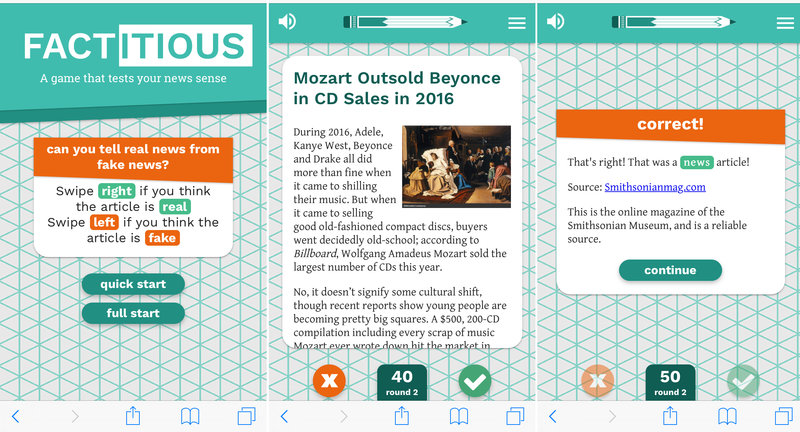


Satirical fake news - insert slides here that have egs on them
Click bait - draws the reader in for financial gain - use google images as examples
Partisan bias - used to promote a response
Fabricated - to mislead the reader


T. Need to encourage students to dissect the URL then research the domain... Whois.net to help make critical decisions

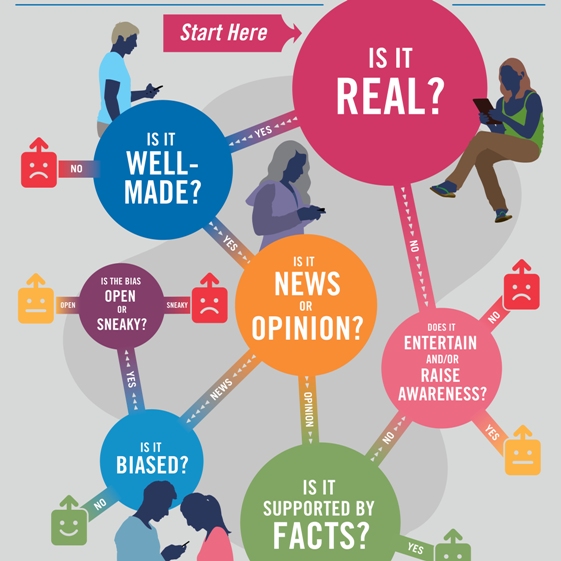
 

- use reverse image search to check authenticity - right click to search in chrome
- Check bio on social media sites to verify accounts


Useful links:

ISTE 2018 - Keynote 1


"There is no such thing as a bad student, they just need instruction patience and time to practise" Hiphop ConnXion

  
  • Digital citizenship is about how you. Use digital devices etc to connect with community- u/st fake v bias must be able to recognise to be successful society - must do these skills in context - difficult to transfer learning from one context to another.
  • Digital citizenship is about Do's not Dont's
  • Stdnts use social media to effect change
  • Positivity empowers
  • What is one thing I can do to promote digital citizenship: Blog badges #digcitcommit #ISTE2018
Patricia Brown:
  • Digital media can be used to dispel myths and fear and can promote positivity to propel change by giving everyone a voice
  • Take the challenge to use your voice

Jennie Magiera:

  • Challenge yourself to tell your untold stories
  • Student community leaders who are creating positive change have been recognised for:
            - Use social media to discuss issues that affect those living locally
            - Get your voice heard
            - Inform student activists of issues to support
            - Provision for access and learning for children in non represented areas


Student advice:
  • All stdnts have strong mindsets that have been grown by T
  • T allowed stdnt to find own path to duping skills set
  • Foster and cultivate and empower ldrs in lng environments when lng is part of the big picture NOT the whole picture
  • T who focus on the negative and not the positive grow disengagement 
  • T are here to inspire not belittle the dreams of their stdnts
  • Stdnts realise some issues on social media are not ok but need someone to effect that change and make that difference - how can stdnts create change
  • Stdnts are all = and need to be given the same opp to grow passion and empower through = access to the lng 
  • Agency and empowerment grows leaders who are confident with the tools to navigate own futures

David Eagleman
Neuroscientist


  • Humans are diff to animals due to brain structure - s
  • Distance between the input and output in the brain - allows us to think rich possibilities rather than just react
  • Generate ‘what if’ thoughts to promote cognitive thoughts and creativity 
  • Neuroplasticity
  • Efficacy can be gained thru online challenges - with increased levels of retention of knowledge banked that can be recalled in a rich learning situation
  • Self pacing challenges can be used as homework - eg: complete next 2 levels...
  • Risk taking is scaffolded and the fear of failure minimised
  • Bend - break - blend = making connections
  • Challenge the brain to discover what else is out there that supports or challenges our own thinking
  • Look for possibilities - encourages deeper thinking and stdnts to find alternative solutions to same problem
  • Idea quota - challenge stdnts to find eg: 7 solutions to one problem
  • Emotional engagement inspires the ‘want’ to learn
  • Perfection is not the key to success - ability to adapt, change and innovate is - bend break blend means embracing failure as failure invites the need to change and alter thinking
  • Creativity stops the loss of of young Einsteins
  • Kids need the tolls to build the next generation of our world

Tuesday, 26 June 2018

ISTE 2018 - Global Education Day Notes


The 5th C - cultural awareness
Bill Harrison

  • Stdnts need to communicate and collaborate with Stdnts all over world
  • Global immersion transforms schools
  • Stdnts can talk about their global audience as learning happens through a global lens

Empatico Website
  • Forming a COL (communities of practice) through online communication, collaboration and a shared u/st 
  • Tchrs in different states used a shared lesson plan to connect classes through Skype-meant stdnt needed to come up wtith qu and be able to respond to qu in a stdnt led conversation - chn saw states through the eyes of the local chn so gained a deeper u/st as chn had a strong connection to the learning - not a T driven lesson


Virtual exchange and global citizenship

  • Failures of QFI - Quatar Foundation International
  • Virtual exchange - Arab stdnts connect with US stdnts to discuss issues (eg: women driving) - aim to grow peace and justice - diversity of ideas = diversity of solutions
  • Connected classes undertook a shared project (eg: growing the same plant - reflect/on shared growth rates and possible reasons why eg- climate
  • Stdnt opinion needs to be valued as it will -ref to pic of girl and quote about the importance of her voice being heard

Table 21: Enhancing 21st Century Literacies and Global Collaboration through Student-Exchange Program


  • This is a discussion thread for those at Table 21 and will be facilitated by Nandita Gurjar. Ref to pic of handout
  • Discussion with T from Haiti, USA
  • The focus of this roundtable will be how student-exchange program builds students' communication, collaboration, creativity, inter-cultural understanding, and appreciation of one's humanity that is crucial in today's world. Through field trips, informal cultural events, and an immersive socio-cultural, linguistic experience with the host family, inter-cultural understanding is enhanced and respect for one another is generated. Social media communication following the program strengthens continued global connection and collaboration. 
  • Important to connect T and Stdnts thru global collaboration and cross cultural bridges thru social media eg: twitter
  • 21C literacies continue to evolve to allow access to social media
  • Value cultural capital - connections can be made thru cultural storytelling - compare same/diff in stories that have a similar purpose
  • Immersion allows for strengthened connections as builds intercultural u/st
  • Zoom.us - for collaborative online discussionhat carried out online but monitored 

Monday, 25 June 2018

Saturday, 16 June 2018

Visual Connections

Yesterday I was in Karen Ferguson’s class at Tech and was immediately drawn to the display she had on her back wall. Karen has created a 5ft x 3ft google drawing that breaks down the structure and language features of an explanation. Her display is specific to her graphics class but as I could see the potential connections that could be so easily made by my learners I immediately asked Karen if I could use her template to create an example specific to my learners. I have seen a lot of displays in classrooms and online that teachers have created to help their learners make connections, but the content, layout and size of this one completely nailed it!


The link to Karen’s blogpost where she explain her thinking behind this resource is here. As always Karen was happy to share work so my next step is to create my own version to help my learners cement their own connections to the structure and language features needed in explanation writing.

Thursday, 14 June 2018

Creativity in LS2...


This term our Manaiakalani staff meeting reminded us about the importance of creativity in learning. Miki and Josh used their creative skills to create this image for the title page of a DLO they are in the process of creating. 

The DLO is at the moment a work in progress but when I saw what they had done so far I wanted to share it because I think it is a great example of creativity. Miki and Josh are happy for me to share their work and emailed me this to add to my blogpost:

'We are creating an animation about the muscular system. This is a Google Presentation and we used different shapes and lines to create an arm which shows you our muscles. We have used the same drawing of the arm muscles to create a GIF that shows what our muscles look like when we move our arms on the next slide. To get it to look like this we tested some shapes and lines to try to make it look real.' - Miki and Josh

I am looking forward to seeing their finished DLO because the language the boys used when they were explaining to me how they have used lines and shapes to show how the muscular system works was rich and really showed the deep learning that has taken place.


Thursday, 31 May 2018

CoL Meeting #4

Russell's Korero:

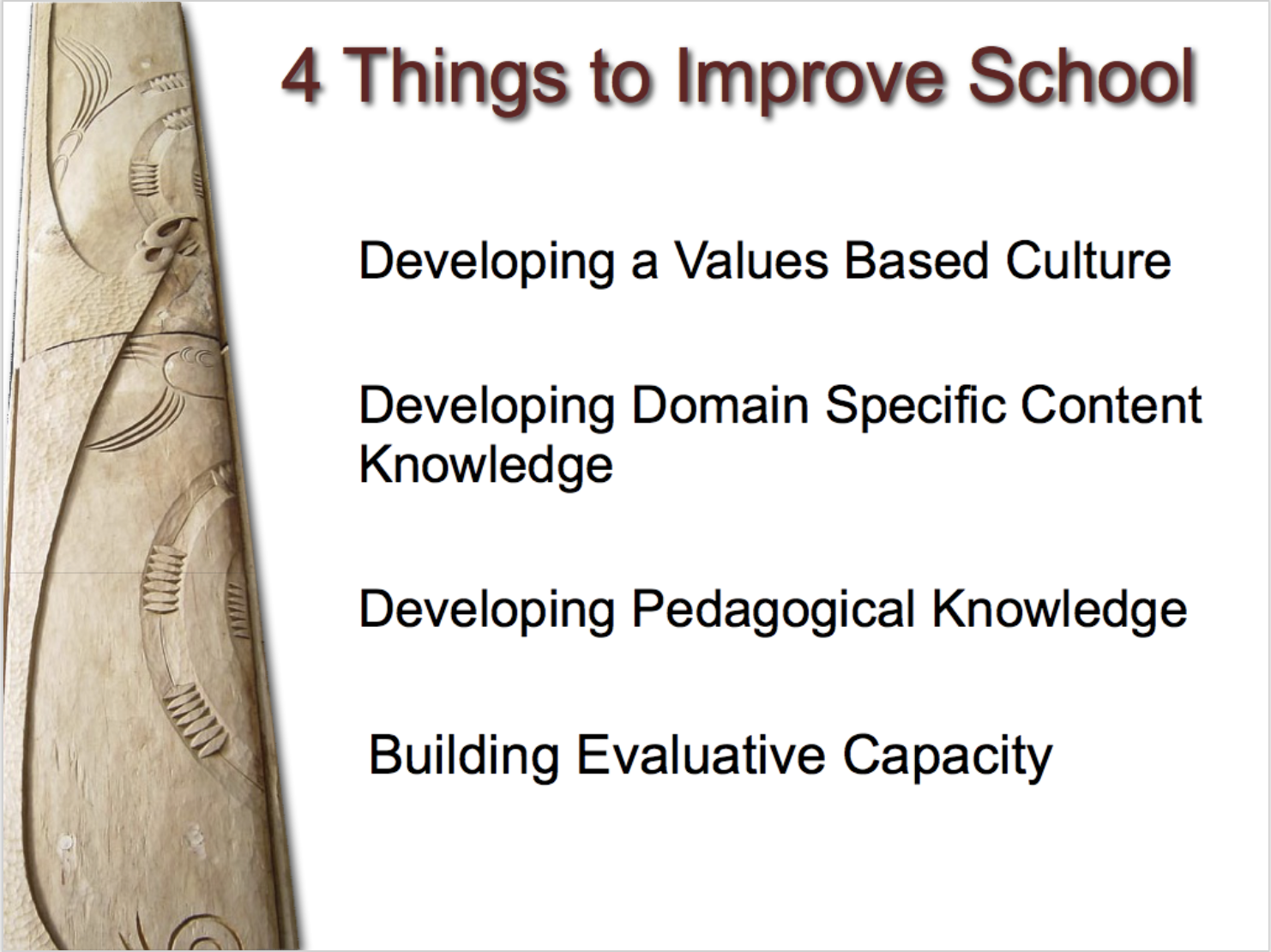
Tonight we were reminded by Russell the history behind schooling improvement in our cluster. The slide below was written before the shift from the analogue to the digital age but identifies the 4 things that change the outcomes for our learners.


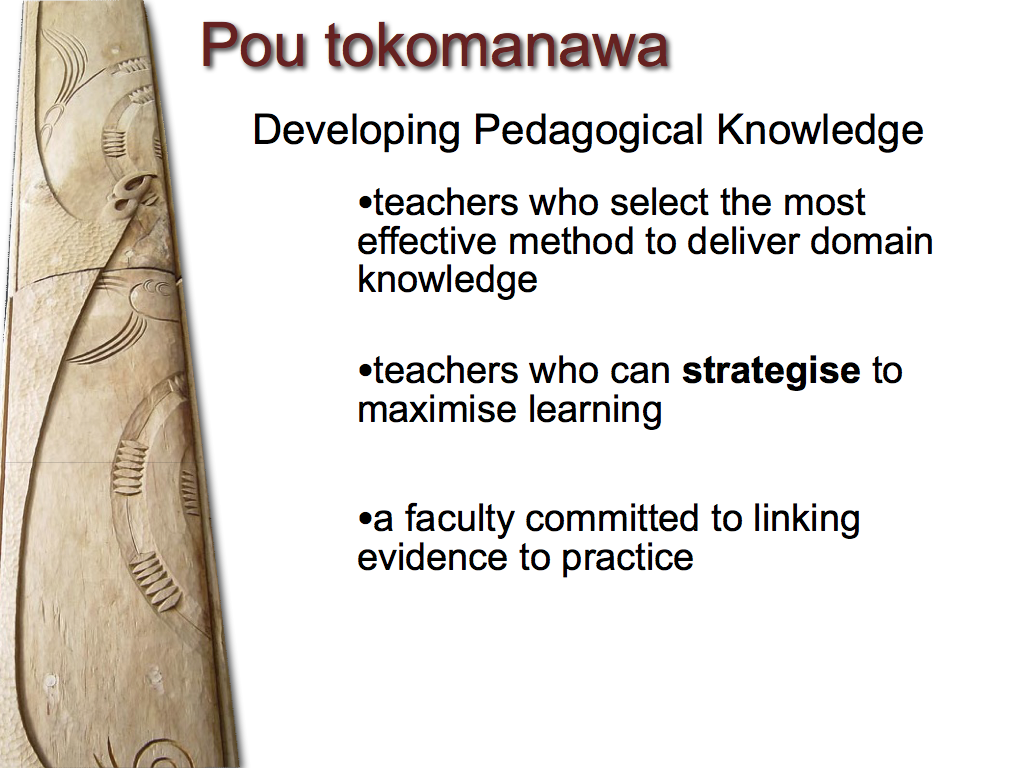
We need to link evidence to practise. Our inquiries help us to share what works and teaches others so they can apply this to own teaching domains.


Teachers strategise to maximise learning - e
g: Learn to read v read to learn strategies must link to the domain it is being applied to. Students need to develop learn to read strategies so they can apply these when we teach them how to read to learn.
Students need to want to learn and understand how they can improve their learning - Teachers need to stop being passive and ignite the motivation to learn through effort and application of strategies to increase engagement.


Teachers shouldn't blame students but should evaluate their success and reflect on how the teaching helped it happen and/or be aware of what needs to change. We measure success by value added. When we open the doors the learning is hiding behind we empower our students to want to learn, when our students want to learn they do learn. It is the power of our teaching inquiries that lets us evaluate, reflect upon and share the many different ways we unlock these doors.


Language in Abundance - Dr Jannie Van Hees:


Learners feel valued and included when language focus is personalised. Teachers need to see value of gifting language - how can we plan for this we learn best we when elaborate our responses by focusing and noticing language - we learn when we learn with and from each other. Traction is not being made as the opportunities for receiving language are inconsistent. Are we (teachers) gifting enough language? We need a balance of student and teacher talk. Children need to think before they speak to their peers rather than just mumbling an answer. Not learner - teacher but US as a class. Students need to be replying to students. Providing opportunities for our learners to use language in a way that engages them will help them become active participants in the conversation. If we encourage our students to explain their thinking by being in dialogue with each other we must remember to teach these skills as the potential for learning is astounding

Strategies to explore:


Talk together


  • how do we do this - need to be in a u-shape, make eye-contact
  • xxxxx said .......  Can we contribute back to him/her without asking a question?


To and fro talking or chain linking


  • Effective conversation is not talking past each other to pick up message in the meaning - need to talk to / listen to.
  • Need to get our learners to realise the ways connections are made through sentences.
  • Links between paragraphs - sentence about one topic - buddy needs to say a sentence that supports and links to previous one - random sentences cannot be linked - Get students to stand up and can only link arms if they link sentences.
  • A conversation needs to be more than just one reply (eg: 'When we opened our compost bin yesterday we saw so many crickets'.... 'that's because it's warm in there and there's food'... How can you add on to the first sentence without asking a question?)
  • Make a template recording chains under each - so it becomes a discussion not just a response and comment, try to keep the chain going.
  • Comment - comment that is not a question but includes the fact, values the speaker, and extends the conversation.