Showing posts with label Feedback. Show all posts

Friday, 26 July 2019

Digital Fluency Intensive... Day # 6


DFI Session# 6 reminded us about connecting with Manaiakalani. Being connected digitally empowers our learners. The default is VISIBLE so connections can be made. We are connected to a powerful network. 


Connectivity is a way of life for our students if we take it from them and they will check out. If you are all paddling in the same direction, you have greater power, you are more efficient. There is an impact on the nature of teaching and learning because if the teacher and student each know what it is you’re meant to be focusing on you are more likely to reach your goals.  Dorothy Burt 


Connected learners share. To make a connection both parties need to SHARE. Sites help close the geographical gaps of the wider connected network. Twitter and G+ increase the audience for our blog posts and helps connect our learners and our teachers. Tuhi Mai, Tuhi Atu (Write to me, write to others) creates a connection with a meaningful audience  for our learners and online toolkits allow us to share good practice.

Google Sites

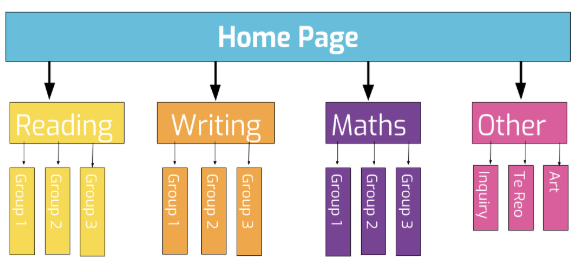
Clarelle Carruthers shared a few insights into the rationale behind creating a google site. When thinking about putting together a class site you need to think about:

  • Who your learners are
  • How they are accessing the site
  • What your theme is
  • Why you are using the site


Designing your layout and having a plan before you begin will keep your site organised and easy for the user to navigate. Here is the link to the presentation Clarelle shared. We then explored each others class sites and left feedback. It is both interesting and valuable to find out suggested changes from your colleagues. It was suggested to me that I include an image of myself so that visitors to my site can make an immediate visual connection to who the teacher of LS2 is. It was also suggested that the images of my students also needed to be more visible. This lead to a bit of rearranging and organising but I love the fact that regardless of where we are in our digital journey, we are always learning and adapting. As you can see in the image below our landing page now has a photo of me, my contact details and an image carousal that reflects student life in LS2.


Useful Takeaways:
  • Think about colour, layout and font
  • Think about whitespace to avoid cluttering
  • Put all site docs etc in one folder with open sharing permissions to ensure its visible on your site
  • Need to access links within 3 clicks
  • Use a layout (in site tools) to ensure buttons are aligned
  • Create a Screencastify to show new students how our site works. This will create an excellent rewindable opportunity that can be shared at home as well.

Monday, 7 May 2018

Backward Mapping for Clarity

Below is my graphic that reflects the backwards mapping of my inquiry. I saw Karen Ferguson's post on how she did this and was immediately drawn to her graphic. As always Karen was happy to share when I asked if I could 'steal' her graphic idea to break down my inquiry.


Last week Kiri and I met with Aaron Wilson (WFRC) to discuss our planned inquiries. Here are my takeaways from our conversation.

With my focus being student efficacy (in writing), I have realised it is important to plan how I can help raise this, and as such have been looking at where I can notice success throughout my lessons. Aaron suggested in addition I pay attention to how I am phrasing my instructions, an important consideration and something I have been adapting over time.

Below are some of Aaron's suggestions as to how by keeping in mind that scaffolds are bridges not supports, I can help break down the barriers my target group have of not knowing what to write.
  • Use vocabulary lists as plan - eg: list all the 'cool' words - must use 5
  • Picture dictation, dictated drawing
  • Summary of a story
  • 10 statements - Draw clouds - 1 minute to draw (only one word allowed to be used)
  • Using the pictures to ignite the talk
  • Retell using the pictures, this is then in their own words
  • Write captions for the pictures
  • Multimodal opportunities - Hear - Draw - Speak and Listen - Write 
  • Change the setting / characters
  • Draw stick figures to plan the writing
  • S chart to show progression

I am excited to implement some of these ideas as I know my learners respond well to 'fun' writing that has a clear end point. I will be taking Aaron's advice and will use video to map the changes over time.

Monday, 30 March 2015

How Austin helped Room 5


Sharing Austin's Butterfly with my MIT focus group helped them make real connections to the power of feedback. The students were amazed at the transformation of Austin's initial image to his final drawing. This clip allowed them to see how using 'the eyes of a scientist' his peers were able to guide him through six drafts. Our challenge was to notice what the feedback looked like. 

What we did:

Ideas were recorded on whiteboards independently then shared with a partner. The objective behind the 'list sharing' being to compare lists and merge ideas into one list. This allowed a further two opportunities to connect to the feedback. Once all lists were compiled we shared as a group. By doing this we were able to co-construct the success criteria that would guide our own feedback skills.

We think feedback is:

  • Information that supports the learning
  • Kind and positive
  • Helps people realise and see their errors
  • Critical (but not mean)
  • Detailed and specific
  • Useful - should have a purpose
From our success criteria we derived our learning intention:
  • LI: To give useful, specific feedback 
This lesson was observed by our literacy facilitator who asked if they had the opportunity to make a decision about their learning during that lesson and if it was successful.

Student 1: Yes I did because I got to help decide what our Learning Intention was and what that would look like. It will help me to help my critical friend by getting them to see their mistakes in a kind way.

Student 2: Yes because we set our own success criteria. It was fun learning about how Austin changed his simple butterfly into a detailed picture. I think I will think about this when I'm helping my critical friend because it will help me look at my own work too.

What's next?

I need to provide real situations that will allow for specific feedback to be noticed and given. This will allow the students to see how the feedback helped them make changes. To move learning to the next level I will need to provide time for the students who receive feedback to explain in their own words why they were given this advice.


Friday, 13 March 2015

... and we're off! MIT15 Update #2

What a week! It's the end of Week 6 and those of you who are teachers will know that means we are now half way through term one. For me that also signifies the conclusion of our visit from the Education Review Office (ERO)! 

When reflecting on the last week I have identified a personal high point of ERO's visit. I know that for many teachers having a visitor in your room is daunting, but when you are part of the Manaiakalani cluster visitors to your learning environment are the norm. I have learned to embrace visits as opportunities to share my classroom practice and celebrate my student's learning successes. Someone was definitely looking after me that day because my observation took place as we were building the foundations of my MIT inquiry! In addition to being asked about the current learning taking place, I was asked to talk about the ways I extend and engage my students. Apart from this being something I am truly passionate about, having an active class site and blog meant I had a wealth of supporting evidence at my fingertips. Many of my learners were spoken to and it was evident from our discussion after the lesson, that all the students spoken to understood what they were doing, why they were doing it and could talk about what they needed to do to get to the next level in Writing. This excited me as I could see that my MIT focus was very much alive in Room 5.

One foot in front of the other:

My next step from Update #1 was to look closely at the content of the comments and see if genuine connections had been made by comparing the comments with the actual work analysed. Unfortunately when I did this my initial euphoria did a very large u-turn. I noticed that there was a significant amount of mismatch between what had been written in the task and what was 'noticed', evident in the comments.

The collaborative success criteria based on content only:

You will have done this correctly if you have:
  • Written in past tense
  • Listed at three goals you hope to achieve
  • Explained what you will need to do to achieve these goals
  • Included at least one question


The example above shows that the success criteria was used to help prompt the feedback but it is incorrect. There is no evidence of a question being asked, nor any evidence of how this student hopes to achieve these goals. 

This week saw us peel back and start by developing student content knowledge. I took advantage of the fact we have just done e-asTTle writing samples as that made the task of how to give feedback both purposeful and relevant. I explained that the rubric was what helped teachers find out what level their students were working at and helped them find out what they needed to teach next to help everyone move their work to the next level. This will make an interesting comparison when I compare my marking with theirs!

Again the students were paired with their critical friends. Each pair was given a version of the e-asTTle marking rubric written in 'kidspeak'. The more able student was given the task of noticing what their partner did well as I want my learners to see receiving feedback as a positive part of our learning. The purpose: To identify what level they are at now. 

What we did:

This was a step by step process as we explored the 'Ideas' component. Exemplars were used to show what this might look like at different levels. We then discussed what it was we were looking for and then carried out the task. I found the students to be extremely honest in their evaluations. Interestingly I noticed that the owners of the writing were fully engaged in trying to 'prove' they were at a certain level, and the critical friends were searching for real evidence to support this. Without me saying anything I observed that each pair was looking at the next box on the rubric to identify next steps. Yah! Connections are being made! We then wrote statements following a prompt:

I think I am at level ____ because _____. To move to the next level I need to _____.

I found that proving where they were at was the easy part. We had to reign back the next steps to only one point (per criteria) as there was a little bit too much ambition. I need this to be achievable in reality and not simply look good on paper.

The best part was this is what ERO observed taking place! Way to go Room 5 your learning conversations showed that you know where you are at and what you need to do to move your learning to the next level.

Throughout the week we continued the process exploring each component of the writing rubric.

What's Next?

I need to have the same learning conversations with my more able learners so that they too can identify where they are at and what their next steps are. Once we have done that we will devise a way of making our learning needs visible that everyone is happy with. Not sure what this will look like but I am sure of exactly what is needed in my planning!


Friday, 6 March 2015

First Steps: MIT15 Update #1


I have been fortunate enough to move through to the 2015 teaching year with some students who were in my class in 2014. This has given me 'feedback experts' who have a level of skills and knowledge in one curriculum area and can talk those new to our class this year through the process of giving peer led feedback. We have a new independent reading challenge which is allowing us to build on the familiar. By that I mean strengthening the feedback comments that were developed last year. This has been a very positive process so far. I love hearing the learning conversations that take place as the 'experts' guide my new learners. The exciting part for me is that the buy in and engagement in these tasks is gaining strength as the unfamiliar becomes the familiar. I have set up the program so that everyone has a buddy. This has allowed me to spend time guiding and conferencing each pair at the level they need. For some we have walked slowly through the process, and for others the scaffolding has almost been removed. 

The album below reflects examples of peer lead feedback in Reading, the curriculum area we focused on last year. The next step is to find out if my learner's feedback skills and knowledge in one curriculum area transferrable to another.


By providing this 'peg to hang the new learning on' I leapt into the oblivion and buddied up my class so that each person had a 'critical friend' to give them feedback on their personal writing. I needed to see where my learners were at as far as being able to give feedback in Writing so I simply asked them to work together to see if, when wearing their critical friend glasses, they could use our success criteria to notice where their partner had made a connection. 

The album below reflects examples of peer lead feedback in Writing. This is a snapshot of the initial independent feedback comments. The students were reminded only to use the success criteria to see where their partner had 'got it right'. 


What's Next?

The comments I have included in the album show that I have a great starting point. My next step is to look closely at the content of the comments and see if genuine connections have been made. I will do this by comparing the comments with the actual work analysed.


Friday, 13 February 2015

Creating something that is going to help somebody else learn:

Today the Manaiakalani Innovative Teachers 2015 (MIT15) group met to share the focus of our inquiries. It was inspiring to be a part of this discussion and to have the opportunity share this process with such talented educators.

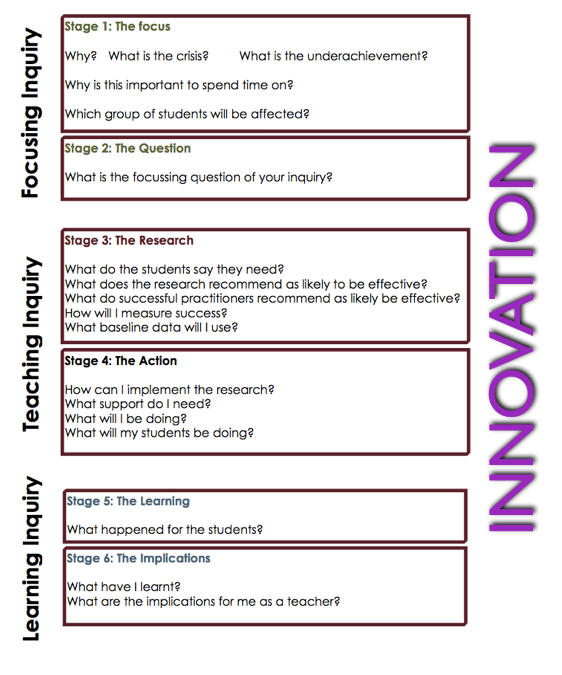
Stage #1:

I am very passionate about shifting student achievement and know that by empowering my learners with the tools to help them reach those ever changing ‘next levels of learning success’ is one way of achieving this.

Student success in Writing is quantified against a series of levelled national standards and national norms. The achievement levels of our own priority learners are measured against the achievement levels of all New Zealand students at the same year level, and sadly our data continues to reflect noticeable disparities. Last year an assignment for university provided me with an insight to the power that peer led feedback had on shifting student achievement in Reading when it was given and received in real time and context. This year MIT15 is allowing me an opportunity to explore if by drawing on this knowledge, I am able equip my students with some of the metacognitive tools that will allow them to strengthen their own understanding of the language features and structures needed to reach national levels in Writing.

The ‘Comments’ tool in Google Docs, when used as a forum for the learning conversations peer led feedback facilitates, will afford my learners opportunities to learn with and from each other in a safe place, where successes and errors are noticed; and ideas can be suggested, challenged and resolved, as opportunities to 'create something that is going to help somebody else learn' are actively sought.


                                            William Glasser

Stage #2:

I will ask the questions:
  • ‘Are the feedback skills and knowledge in one curriculum area transferrable to another?’
  • ‘Are all learners able to notice and feedback on the deeper features of their peer’s writing?’
  • ‘Is the feedback justified and interactive?’


Shifts in student achievement will not happen simply because the concept of critical friendships is introduced. Attaching a name to something will not cement understanding. To build and strengthen the content knowledge of my priority learners I need to borrow from Dorothy Brown’s idea by providing opportunities for ‘repetition without boring’ so that real connections can be made and understandings strengthened through informed learning discussions.

Tuesday, 25 November 2014

Wednesday, 15 October 2014

Proud Teacher


An example of where my intervention is taking my students:

The feedback below shows an example of how dialogic interaction between learners helps encourage justification of responses. I am so proud of my students as this level of thinking is completely independent of any teacher input.