Showing posts with label PBS. Show all posts

Monday, 5 June 2023

Teacher inquiry at PBS 2023...

This year Dianne Fisi'iahi and I are both in-school COL teachers for Panmure Bridge School. What I like about this is that there are two of us leading the implementation of teacher inquiries for 2023. This means neither of us are trying to find time to have the professional discussions needed with our colleagues. By sharing the responsibility we are able to manage this much more effectively than past years. I look after the teachers participating in the RPI program as I am their mentor, and our beginning teachers. Dianne looks after the more experienced teachers. This means we are playing to our strengths and guiding teacher inquiry effectively in our school.

We began our journey by using the presentation I created a few years ago which helps us set up our PBS staff for their inquiries into their own practice. With two sets of eyes we have adapted and tweaked my original slides, making our inquiry process more streamlined. I am also enjoying the fact their are two voices delivering the messages, which means we can support each other in staff meetings. 


We began by supporting our teachers to analyse their data to find the gaps in learner knowledge, then use this to identify a target group and formulate their inquiry questions. All inquiries are visible with links to professional blogs being recorded on a shared doc so that we can learn with and from each other. Our second TAI session was about creating a causal chain to help map out inquiries and stay on track. Both of these TAI staff meetings have been shared with a purpose to encourage buy-in and inform blog posts. 

Dianne and I share our inquiries as exemplars to guide those new to this process. We have also shared the link to the Manaiakalani Kahui Ako page so that teachers can find exemplars of inquiries that align with their year levels. Our next step is to encourage our PBS teachers to tap into the expertise of the Across School COL teachers. 

Wednesday, 12 April 2023

Implement and Try #1: Digital Escape Rooms

Last term I attended the Creating Digital Escape Rooms with Donna Yates toolkit. Donna introduced us to a collection of published digital escape rooms which we had an opportunity to explore. We were also shown how to create our own escape rooms using Google forms. 

Here is the link to Donna's presentation. Slides 7-15 have clear steps to follow if you are keen to give this a try.

As a way of putting my new learning into practise and helping my students strengthen their connections to their affixes learning, we created our own affix themed digital escape rooms. The challenge was to devise 10 affix related questions that their peers would then answer in their quest to open an online game that let them apply their new learning in a fun way. The games selected were found using our smart searching skills so are not our own creations. That is one of our next challenges.

This was a fun and practical way of reinforcing learning. Dictionaries were out in full force and the discussion was rich and very loud as questions were being tested on friends orally before being recorded on the Google form. What I liked about this activity was the fact it forced my learners to draw on and recall their new learning, the dictionaries and the books they have been completing challenges in were used purposefully and the whole activity was met with a huge level of enthusiasm. 'Easy' questions were soon pushed to the side as the desire to write the 'hardest' question became the challenge of the day. This activity took two blocks of learning to complete but was absolutely worth it as the 'I've escaped' cheers showed the level of buy-in and allowed my learners to see their own success in real time, and I was able to see just how strong the connections to our new learning are.

We have created a page on our class site for our escape rooms which can be found here

Monday, 27 July 2020

Professional Development: Overview of a balanced Reading program...

Last week Panmure Bridge School and Glen Taylor School had a fantastic professional development TOD lead by Sheena Cameron and Louise Dempsey. We explored and unpacked the modelled, shared, guided and independent reading approaches, with lots of great practical ideas shared that I am excited to introduce into to my reading program. Here is the link to my notes.

Some of the key ideas we explored:
  • Explicit teaching of reading is important at all levels
  • Summary, main ideas, evaluate, justify, connections, synthesising
  • Must be teaching reading across the curriculum
  • Becoming a proficient reader means decoding, self monitoring, critical thinking, evaluating
  • Self monitoring means knowing what words mean, decoding and making meaning
  • It is not ok to not understand
  • Give a picture of the word to help students make connections and move to making meaning not simply decoding without understanding
  • Think, talk, elaborate
  • We read to students to:
    • Encourage opportunities to focus and notice vocab, language or key points
    • Gift the time to think about the complexities of a text - comprehension
    • Modelling think alouds - what fluent reader do to make meaning
    • Develop a passion for reading
    • Give information
    • How words join together
My Takeaways:

                                             
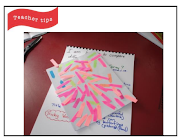
(Images from The Literacy Place presentation)
  • Introduce 'tricky words'
  • Encourage students to use sticky arrows to find the example or evidence or identify tricky words
  • Introduce post its as ‘stoppers’ to avoid reading ahead in guided sessions
  • Y7/8 need attention to prefix and suffix - use white boards to add suffixes and prefixes to build words from a root word (find these in the comp. book)
  • Think/pair/share...think/pair/record
  • Shared Reading: 
    • Teacher models reading but students must be able to see the text (words)
    • Exposes students to a variety of texts (their reading diet is limited due to skill level being limited)
  • Encourage students to build on from each other's ideas by saying “I’d like to add to that because...”

Monday, 23 September 2019

T3 PBS Teacher Inquiry Check-in...

Today I met with all our staff to talk about their teacher inquiries. I asked everyone to share with me where they were at now, what changes had been made to their teaching practice and how I could support their inquiry moving forward into term 4. These were rich conversations and provided a great forum for sharing successes and bouncing ideas. 


The list below reflects the common themes and recurring ideas when teachers discussed the changes made in their teaching practice to help us accelerate shifts in our learners from Year 0 to Year 8: 

  • Teachers modelling/gifting language they want students to use in context across curriculum areas
  • Increase in time spent to unpack vocabulary
  • Timetable changed to cater for late students
  • Phonics programmes implemented in all classes
  • Changes/adaptations made to the way data is recorded to give a clearer picture of micro shifts
  • Drawing connections with visual scaffolds
  • Use of mentor texts as exemplars
  • Incorporating elements of critical literacy to help strengthen connections
  • Shifted locus of control to give students a more agentic experience in the classroom
  • Increase in instructional time
  • Revisiting learning when connections are not strong through rewindable opportunities and further instruction
  • Making connections to prior learning
  • Differentiation is needs based and can be supported with upskilling of TAs
  • Adapting teaching DLOs to meet the needs of learners
  • Planning for talk time
  • Making use of collegial expertise

This was a very valuable opportunity as it showed that as a staff, we are all on the same page. No one apportioned 'blame' to students where innovations tried had not been successful. Our conversations instead, focused on changes or adaptations made when these speed bumps appeared. 

Tuesday, 15 May 2018

Manaiakalani Staff Meeting: Create

“Our children are living in the most intensely stimulating period in the history of the earth.... Creativity is now as important in education as literacy, and we need to treat it with the same status." - Sir Ken Robinson TED talk 2006


Creativity was the focus of our staff meeting yesterday. We were challenged to think about what our learners need to harness to create and share their learning. The GIF above reflects one way we create in LS2. Creativity in NZ classrooms is not new. Creativity empowers learning, and digital technologies empower creativity. Have a look at the ways we harness and empower creativity from NE to Y8 at PBS.


Wednesday, 5 July 2017

Sharing and Modeling

Photo: @Karen0986

Earlier this term Karen Fergusonone of my CoL colleagues from Tamaki College came to visit us in LS2. She spoke to my learners about how we use self assessment in our learning. Karen's blog post about her visit can be found here.  Although initially a bit shy, it was great to see how my learners were able to talk confidently about their learning. I was able to see from Karen's conversation with my learners that I scaffold this quite a lot, and perhaps need to lessen this to promote increased independence. My take away is to visit Karen and have a similar conversation with her Year 9/10 learners. Doing this will help me blend into my instruction, some of the self assessment language she uses to set our students moving on to Tamaki College, up for success.


Today Dot Apelu, another of my CoL colleagues from Tamaki College came to observe us in LS2. Dot had seen a previous post I wrote and contacted me about sharing my practise. Her summary of our initial discussion is here. I explained to my learners that Dot was here to see how we used some of our learning strategies to strengthen our understanding to new learning. 

To model our dialogic learning in practise, I asked my learners to identify and summarise the main points of our learning linked to our work with Tamaki Wrap the previous day. I explained that we needed to hear their learning talk so it was important to use their words, and as we moved around the groups I observed something that was new to us at the beginning of the year, is now something perceived by my learners to be the norm. They were able to explain their thinking and use examples from the available information (including our rewindable example of the flipgrid they created yesterday) to support their reasoning. 

The well established collegial connections we have in place in Manaiakalani are definitely as asset to both our teachers and our learners as we work towards bridging the transition gaps between Year 8 and Year 9. My take away from today is to make time to observe more of my colleagues across our cluster, as the best professional development is available right on my doorstep.


Thursday, 29 June 2017

Collegial Sharing

Yesterday I was invited to share my inquiry journey so far with our junior syndicate at their team meeting. I talked about the process of my inquiry, and how my original hunch has spiralled in different directions. I felt confident giving an honest account of my journey so far as the discussion flowed honestly and openly both ways. My next steps with the junior syndicate are to model how I generate and use student voice within a lesson and to co-construct ways this might be further developed in the junior school. I am excited to work alongside these teachers as I know that this is going to be a two-way learning opportunity.


Wednesday, 12 April 2017

Te Taiao o Tamaki Hangouts

What a great morning we are having in LS2! Today our Manaiakalani schools are celebrating our cluster wide inquiry at Te Oro with presentations and performances. Not all of us were able to attend so the wonderful hangouts have enabled us all to be a part of the learning celebrations. We began by watching Glenbrae students present their inquiry. It was really interesting to see the learning other schools have been doing. When it was time for the PBS performance we all sat glued to our screens. 

 Listening to the Glenbrae students present their learning.

 Watching our own Panmure Bridge School performance.

Watching Tamaki College students present their learning

Wednesday, 28 September 2016

NZLA Conference Presentation


Kiri Kirkpatrick and I were invited to share how we incorporate digital literacies in our ILE at the NZLA 2016 conference at Waitangi. Great to have such an interactive audience and to receive such positive feedback. 


Thursday, 4 August 2016

Movie Making Hints Toolkit


Earlier this week I went to one of the seven toolkits offered by the Manaiakalani cluster. These toolkits are a fabulous initiative that give us the opportunity to tap into the expertise of our colleagues. I went to the Movie Making Hints toolkit offered by Greg Wong. Although I have been making movies with my classes for a number of years now it is always a bonus to be able to revisit my own learning as I know I come away with a useful takeaway each time. My takeaway this time was storyboarding, which I put into use two days later with a group of students who asked if they could make a movie to show their learning. My refreshed knowledge gave me increased confidence when guiding them in the planning stages. 


The boys came to me with the plan on the left and after co-constructing the storyboard, the image on the right shows our rough outline that they have gone away to put together in more detail.

The link to the notes I took is here