Monday, 1 July 2024

ISTE 24 Denver: The Ultimate AI Learning Toolbox


This session was presented by Holly Clark - Presentation Link

Below are the notes I took. At the moment the problem is that teachers aren’t trained in the AI models, however If you stay in an AI model for 10 hours you will know that model. Often AI costs money so below are the free options that we explored.


Which LLM model does what?

Teachers need to ask: What model did you use to get your answer?


AI detectors (eg: Turnitin.com) don’t work - problematic


BRISK Teaching - chrome extension - pins itself to any google tab open - records a movie of all the editing done throughout the writing process - it tells the time spent on the text - can also give targeted fb


Students have agency when AI checks and feed back on work written

AI can help with rewording, 


Curipod / Curi.live - platform for questioning or statements - T to push out all responses to class - everyone to vote on favourite sentences (allows everyone to see the other sentences as mentor text) - see 2 at a time - click show more or scroll for next pair - not overwhelming - you can vote on as many as you like - chooses most voted 3 sentences - Explore winning sentences and discuss why - Write paragraphs and AI will give fb
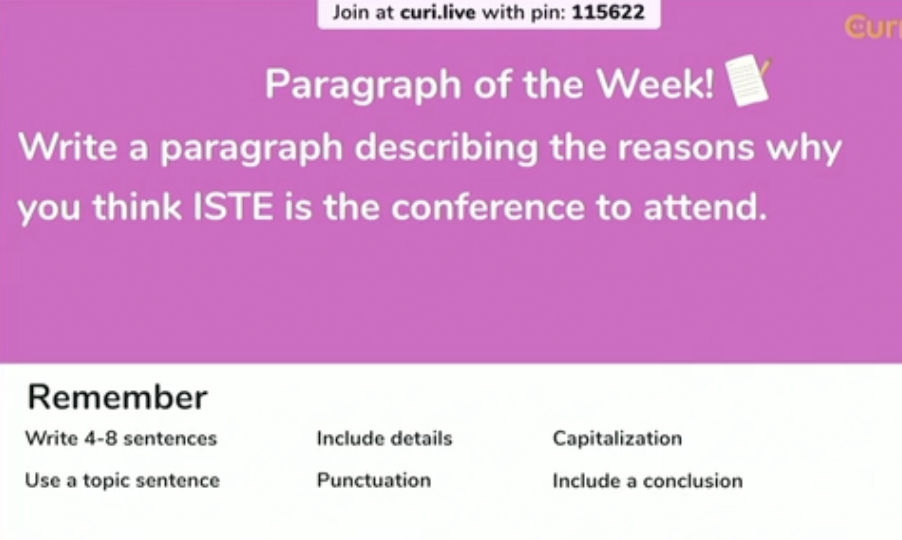


Students benefit from just in time fb - AI gives the fb - Curipod has speech to text - your paragraph is at the top fb is below - arrives on your screen - students copy and paste paragraph and fb into doc - analyse it - then rewrite using fb as a prompt/guide - T needs to click on ‘Students receive AI fb’ - has a variety of text types to choose from - T can prompt AI to personalise to their focus


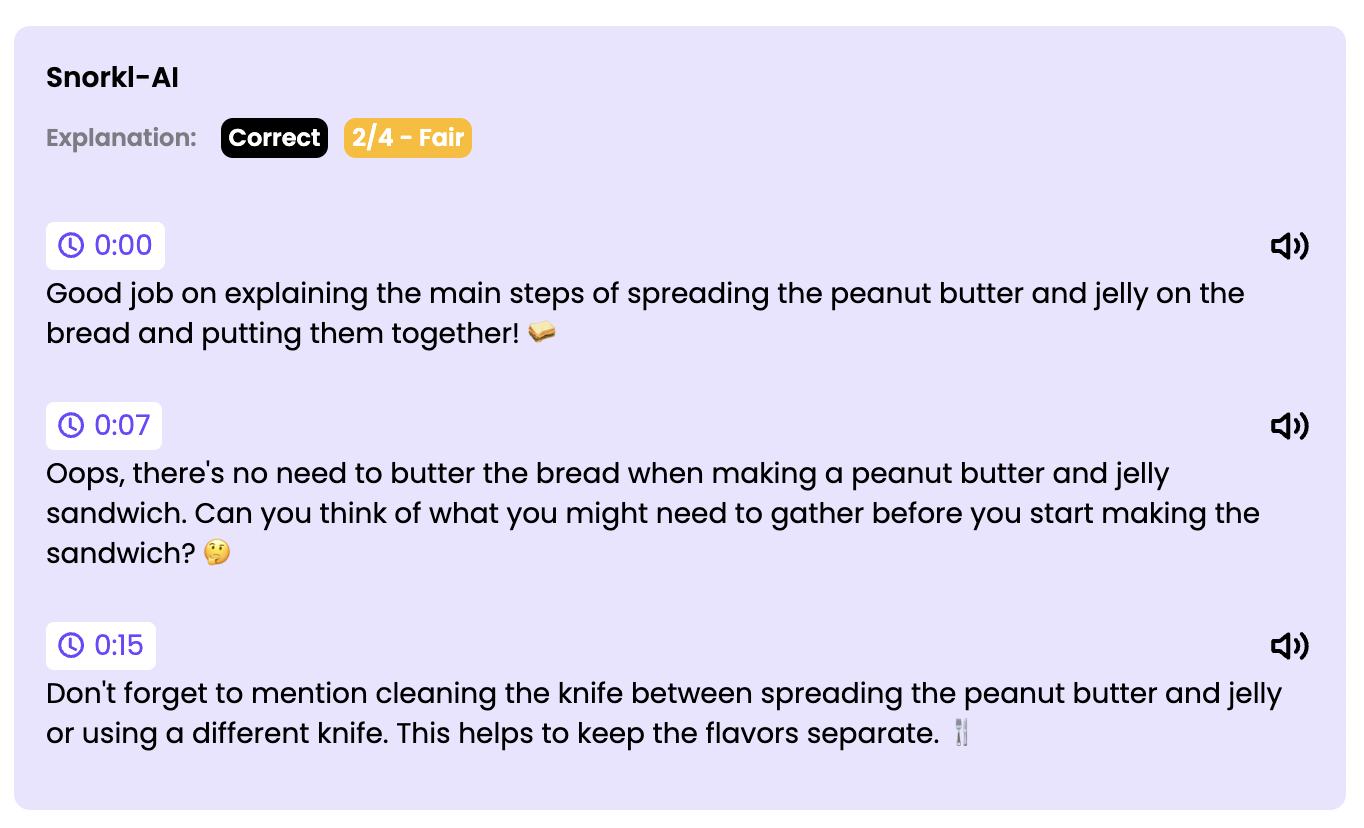
Snorkl - With Snorkl, students record and share their reasoning then receive instant AI-powered feedback to drive deep and meaningful learning. 


T creates a question - student presses voice record then explains the problem solving process thye followed - AI records ann/or creates a written version of this on the screen - fb is then given


My example below:


Stickity for Google Docs and Slides


I saw the Stickity extension being used in a presentation at ISTE and immediately thought how useful it would be in the classroom for teachers. I personally often include a text box on my teaching DLOs that tells my learners if the activity is an individual, paired or group challenge.  Additionally there are feedback stickers which will add great visual cues for my SEN/ESOL learners.

There is user age limit in place for those of us who teach students under 13 years of age, so this is something to be aware of when adding this extension. 


ISTE 24 - Denver: Storytelling Done Digitally to Showcase Student Voice, Views and Perspectives

This was my first workshop at ISTE. The room was set up in a speed dating style so we could pick and choose from the activities available by rotating around the learning every 20 minutes. These are the sessions I attended.


Words Have Power: Great Narrative Movie Making Projects
Presenters: Jessica Pack @Packwoman208 and Georgia Terlaje @georgiaterlaje
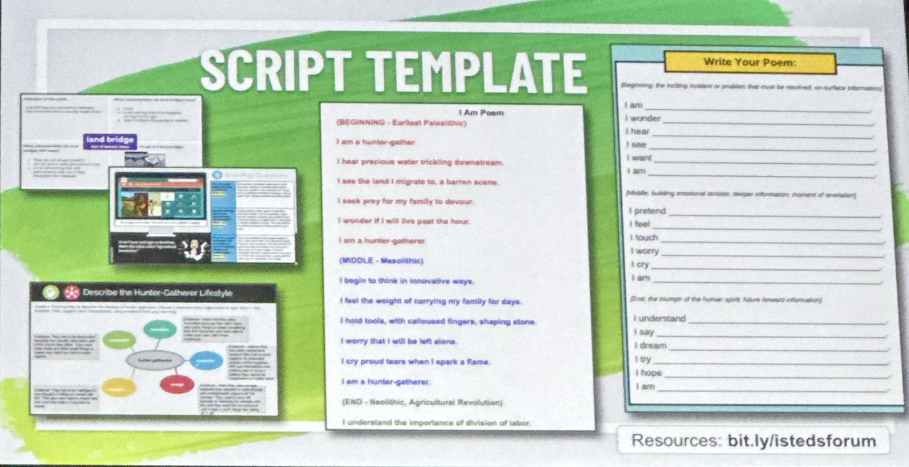
Session Resources bit.ly/istedsforum
Session Recording: https://youtu.be/bs2QdPZ6XFs
Link to the padlet
  • Words have power - great narrative mmo ie: making projects
  • Movie making - 2 hours to create 
  • Synthesise ideas into one project - move to movie in place of static DLO
  • Storytelling is a formula
  • Content in the narrative framework helps us to connect to the learning
  • 3 acts 


  • Front load - research - thinking maps - frameworksWe video
  • Adobe express
  • Learn program thru low level content at start of year so programs can be ref back to when cognitive demand grows
  • Repeat the process - avoid the one and done
  • These activities are great for 'rinse and repeat' - just change the content

Voice Acting Stories - This was a self directed lesson with QR codes and written 
prompts to guide your learning
  • Voice Acting - Delivering StoryTelling Voices
  • Mary had a little lamb… read in a variety of voice styles… draw randomly so it pushes kids out of comfort zones
  • I am poem can be transferred across the curriculum English, Maths (I am zero…) - refer to pic
  • Writing process includes feedback/feed forward to authentic audience
  • Choose your own adventure
  • Pixabay - Text to image in Canva - Unsplash
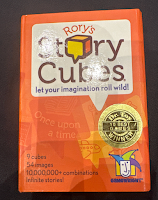
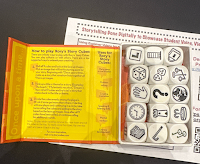
  • Rory’s story cubes - a series of dice with different images that when randomly selected can be turned into a story
  • Make a Lego scene to tell the story

Gallery Walk 
Presenter: Julie Jaeger 
  • Getting Started With StoryTelling and Easy to Implement Intro Activities QR codes used - link to resource above.
  • Scene drop use fairy tales - Can use hand and image movie like the recycling one - can transfer to iPad by taking image and then using speech to text to tell their story
  • Stories must have problems - use a story arc or a chart
                                                         
  • Maths can tell stories eg: x the variable
  • 6 word stories
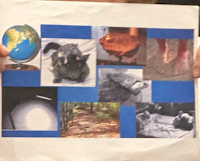
  • Show a selection of pictures
  • Choose a 6 word statement to match the image. Students all have a turn at sharing their words.
  • Now unpack the image using the senses to explore the problem in the image and the emotions the image might be facing.

Student Created Documentaries
Presenter: Laura Davies
Session Resources: ClimpChamp https://clipchamp.com/en/, Canva, https://seestoriesalaska.org
Session Recording: https://youtu.be/k8RjzOD7sfY
Social Media: Twitter: @lc_davies Instagram @lauracdavies and @sms_art_science
  • What stories can our students share about our community?
  • Paddle doc could link to hoe making
  • Grandparents are a great resource for access to docos on the past etc
  • Be aware of what needs to be edited out
  • Ref to slide 4/Slide 5 has examples bit.ly/Stikine24
  • Look at presentation for frameworks
  • Clipchamp for editing films
  • Canva 

Thursday, 2 May 2024

Qu 3: Building an accurate profile of students' learning - tools, measures and approaches...

Students who have achieved at a level considered to be 'below' the level they should be, are approximately a year behind the level they need to be at to make sense of the new learning. These are the students who with encouragement, scaffolding and explicit teaching will often make the gains needed to reach expectation.

Professional development empowers teachers with the skills to improve classroom practises, by introducing them to new learning which can make the changes needed in their practice to help strengthen the connections their students have to the learning. On occasions PLD is something that is simply attended so that a box can be ticked, but when embraced, can make a real difference. Sometimes despite having all the I's dotted and all the T's crossed shift does not take place. 

The conversations that often follow these results tend to apportion blame towards the student.... We have all at one stage or another heard phrases like '...did not connect to the test...'didn't read the questions carefully'... 'ran out of time'... 'was having a bad day...' It is only in recent times that we have been hearing teachers truly reflecting on their practice. What excites me as a team leader is hearing teachers identify where the gaps are in their own practice, then actively explore ways to try and fill these gaps. It the teachers who see student shift as a collaborative journey who make the most difference.

After the beginning of year data was collected and analysed at class level, this data was then shared at team level. As a group we celebrated our successes and looked at what teachers were doing in their classrooms to achieve these results. These strategies were then shared with examples that helped people see what it looked like in practise. Collectively we identified the support we would need to make both big and small changes in our practices, that would help to accelerate shift in all our learners, and together we formulated a plan that will help us get there.

The tools/measures/approaches:
  • Planning 
    • Long term
    • Site DLOs
    • Shared format
  • Sharing time at syndicate meetings
    • 10 minute quick tips that can be used in literacy
  • Feedback from PLD and resources shared
  • Classroom observations 
    • linked to literacy
  • Peer observations
    • linked to literacy
    • noticing ideas that are working and are embedded in the program
  • Surveys
    • Teachers
    • Students - target group
  • Time point 1/2 data analysis

Wednesday, 1 May 2024

Qu. #2 - Why we judge this to be the most important and catalytic issue of learning for this group of learners this year...

Achieving accelerated shift in Literacy was identified as being one of the most important and catalytic issues of learning facing our students in Y4 - 8, this year, when the time point one data was analysed. Exploring how learning gained from professional development is helping to strengthen teacher practice and achievement in literacy is something I haven't looked at before so I am looking forward to sharing my findings.

As I am not looking specifically into my own practice it is important to maintain anonymity. This inquiry is a syndicate wide focus and therefore not a focus on individual teachers. Our starting point with professional development linked to Literacy undertaken by the senior syndicate (Y4-Y8) in the 2023/24 period consists of:

  • In Class Support (ICS) 2023
  • Reading Program Intensive 2023 teacher/mentor meetings and observations 2023
  • T Shaped Literacy 2023
  • The Code 2024
  • In Class Support (ICS) 2024
  • PRT Y1/2 teacher/mentor meetings and observations 2023/24

To measure the shift I needed clear picture of where our student's starting points were. What to collect for baseline data was something I struggled with as I couldn't decide on the best way to do this. Like many faced with a direction conundrum, the task ahead found its way to the 'I'll do it later basket'. My problem was 'later' became a hard time to find. I knew I needed help and today that help came in the form of Amy Tofa and Matt Goodwin. 

I explained my inquiry focus and together we came up with a way forward that made sense to me. A really useful piece of advice here is to talk to your colleagues as saying things out loud and getting a 2nd opinion, or 3rd in my case, is one of the most valuable resources we can tap into. Amy pointed out to me that the picture I was trying to capture was huge and suggested I focus on one group of students. I am 100% taking her advice to focus on our students who scored 'Below' on our beginning of year literacy assessments.


The data above shows the percentage of our Year 4 -8 students who scored Below expectation on the PAT Reading Comprehension and e-asTTle assessments. I will be using this data to measure the shift made between the two cluster wide assessment timepoints in my target group. 


Tuesday, 30 April 2024

Qu 1: Student Inquiry Foci...

With the Manaiakalani goals of achieving 1.5 years progress inside a year (big 3), improving teacher practice, increasing attendance and hauora in mind, Richard Johnston, (our principal), challenged me to look at 'How we (PBS) are using PLD to accelerate shift across our school'. Having inquired into my own practice for many years I was excited to embrace this much bigger school wide focus. However, when I sat down to map out the way forward I realised I could make more impact if I looked across my own team, the senior syndicate.

To do this I am going to need to drill down into student achievement and teacher planning across our syndicate and look closely at how my team is using their new knowledge to change their practice and accelerate shift in student achievement in Literacy. To ensure this new learning becomes embedded within teacher practice we capture the journey via our appraisal system. This gives both myself as the appraiser and the teacher as the appraisee, a shared vision of how we can both contribute to their professional growth moving forward. It also means I can, to quote Russell Burt, capitalise on my role as our in school COL teacher to lead the teacher inquiry process to help 'build teacher and school capability in raising student achievement outcomes by linking evidence to practice.'

When looking at our class data we already have processes in place that allow each teacher to identify where the gaps are and think about why these gaps might be there before we can begin to fill them. It is not about trying to fix everything but rather strengthen the areas that need the most focus. In our team we do this both individually at class level and collaboratively at syndicate level. It helps to identify the commonalities so that we can move forward together learning with and from each other along the way. I will share this process in my next post.

My challenge now is to find out how I can capitalise on the learning gained from professional development undertaken by my team to help accelerate shift across our Year 4 - 8 classes. When I unpacked my journey forward I realised it's not about only strengthening teacher practice but also about how we can harness the creativity and power of our new learning to strengthen student engagement and spark curiosity in literacy.


Monday, 5 February 2024

TOD 2024...

We began our 2024 learning journey this year with a staff challenge to meet at the top of Mt Wellington / Maungarei. The reason, to help all our staff (old and new) to strengthen their connections to the whenua our kura stands on, and set them up for success as we step into our first Inquiry focus of the year, 'Our Whenua'.


Back at school we revisited the Learn-Create-Share model which was unpacked and applied to rich discussions as to how we could apply the learning across the curriculum to our pending whole school visit to Maungarei.


Following on from this I lead a PLD session to show how we could find the story behind our local area through a close look at the street names. This was adapted from a previous challenge set by Richard Johnston in 2022, and the learning from a toolkit run by Scott Mansell from Tamaki College. What I appreciated from this was the buy in from the staff and suggestions of ways we could adapt was was originally planned as a Year 7/8 lesson to every year group. We definitely do learn best when we learn from each other!